
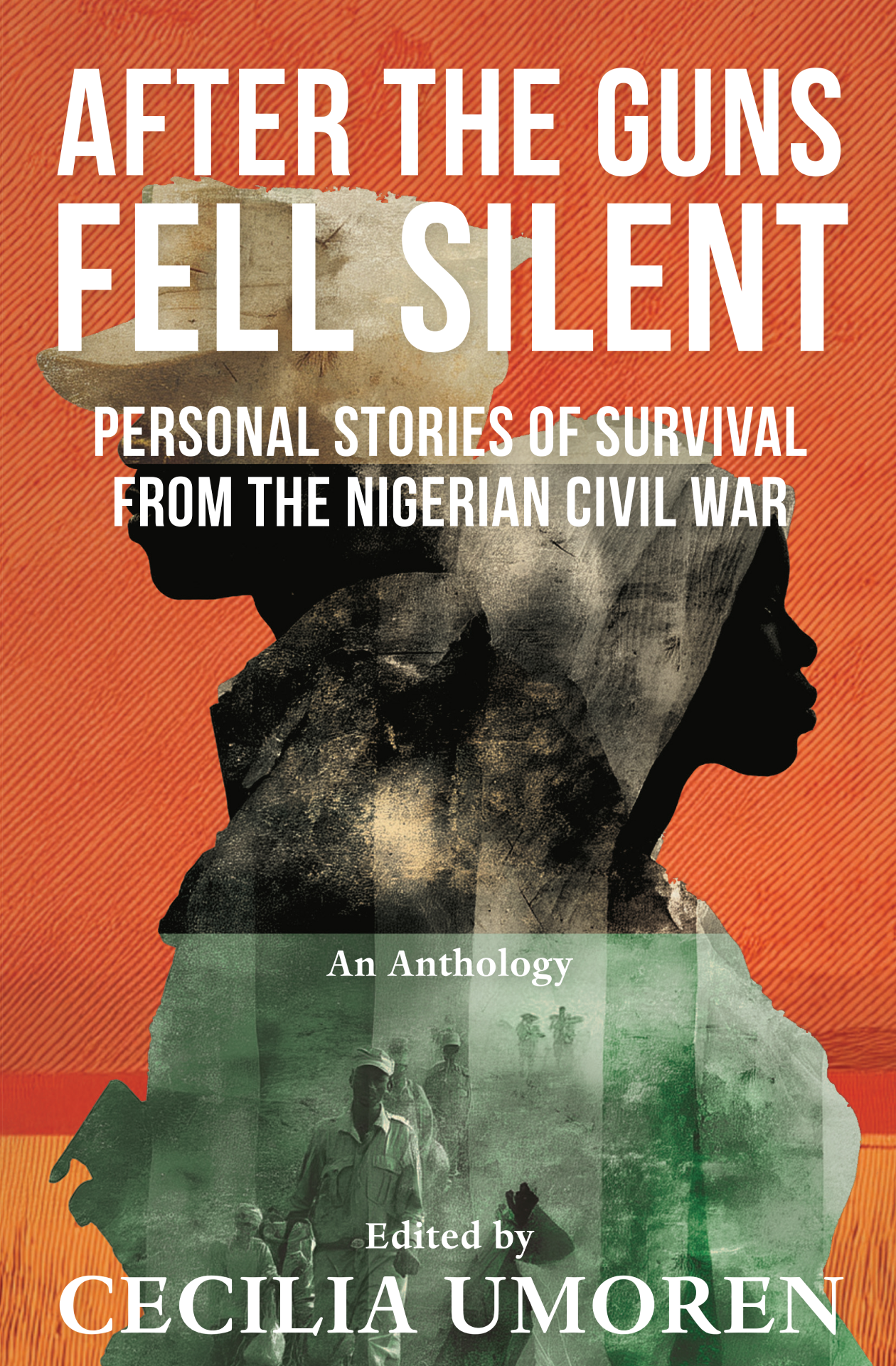
PREFACE
Several years ago, I conceived the idea of a book – a compilation of first-hand stories and recollections from the Biafra experience. But in spite of my feeling that there was a need for the many untold personal stories from that conflict to be heard, I did not follow through on this idea because I was afraid it might offend the sensibilities of some of my friends and acquaintances.
It was not until recently, after reading our Book Club pick, Dr Okey Anueyiagu’s Biafra: The Horrors of War – The Story of a Child Soldier, and listening to his fascinating account when he came on as a guest at our online meeting, that I was freshly motivated to continue with the project.
During Dr Okey’s Q&A session, I was shocked by the complete ignorance of some members of our Book Club, and their lack of general information about the Biafra story in its entirety: the genesis, the sequence of events that led to the conflagration, the war experience and its aftermath. I was, however, pleasantly surprised by the genuine interest and empathy expressed by said members, whose backgrounds spanned various ethnic groups. They brimmed with curiosity; some confessed to being embarrassed that they did not know more, while others admitted that they had always wanted to know more, but had been too afraid to ask.
Our history is part of the complicated fabric that makes up this country, but, sadly, much of it is not taught in schools. Nigeria is presently at a crossroads, but we cannot fix our present – let alone chart a path to a secure future – if we do not understand our past and how we got here.
The facts of the crisis that led to the Nigerian Civil War are not in dispute. The tinder was lit by the political tensions in Nigeria’s Western Region during the years 1964-6, which threw that region (and by extension the rest of Nigeria) into a maelstrom of political instability, ethnic tension, and violence. Following Nigeria’s independence, deep divisions had already emerged between the country’s major ethnic groups – the Igbo, Hausa-Fulani, and Yoruba – over political power and resource control.
These divisions were exacerbated, first by the Western Nigeria crisis, and then by the aborted military coup of January 1966, in which a group of (mostly Igbo) army officers overthrew the civilian government of the First Republic, an action which resulted in the deaths of prominent northern and western political leaders. This action fuelled suspicions of Igbo domination. A counter-coup in July 1966, led by northern officers, further escalated tensions, leading to widespread ethnic violence against Igbos in the Northern and Western Regions. Thousands of Igbos were killed in pogroms, and the survivors fled to Eastern Nigeria for safety.
The exodus of Igbos from other regions to their homeland in the Eastern Region deepened the rift between that Region and the rest of Nigeria, setting the stage for the declaration of the Republic of Biafra in 1967 and the ensuing civil war.
The rest, as they say, is history.
It is my hope that this small volume of personal stories will in some way address our understanding, for better or for worse, of that momentous period of our chequered history.
Cecilia Umoren


Reviews
There are no reviews yet.