
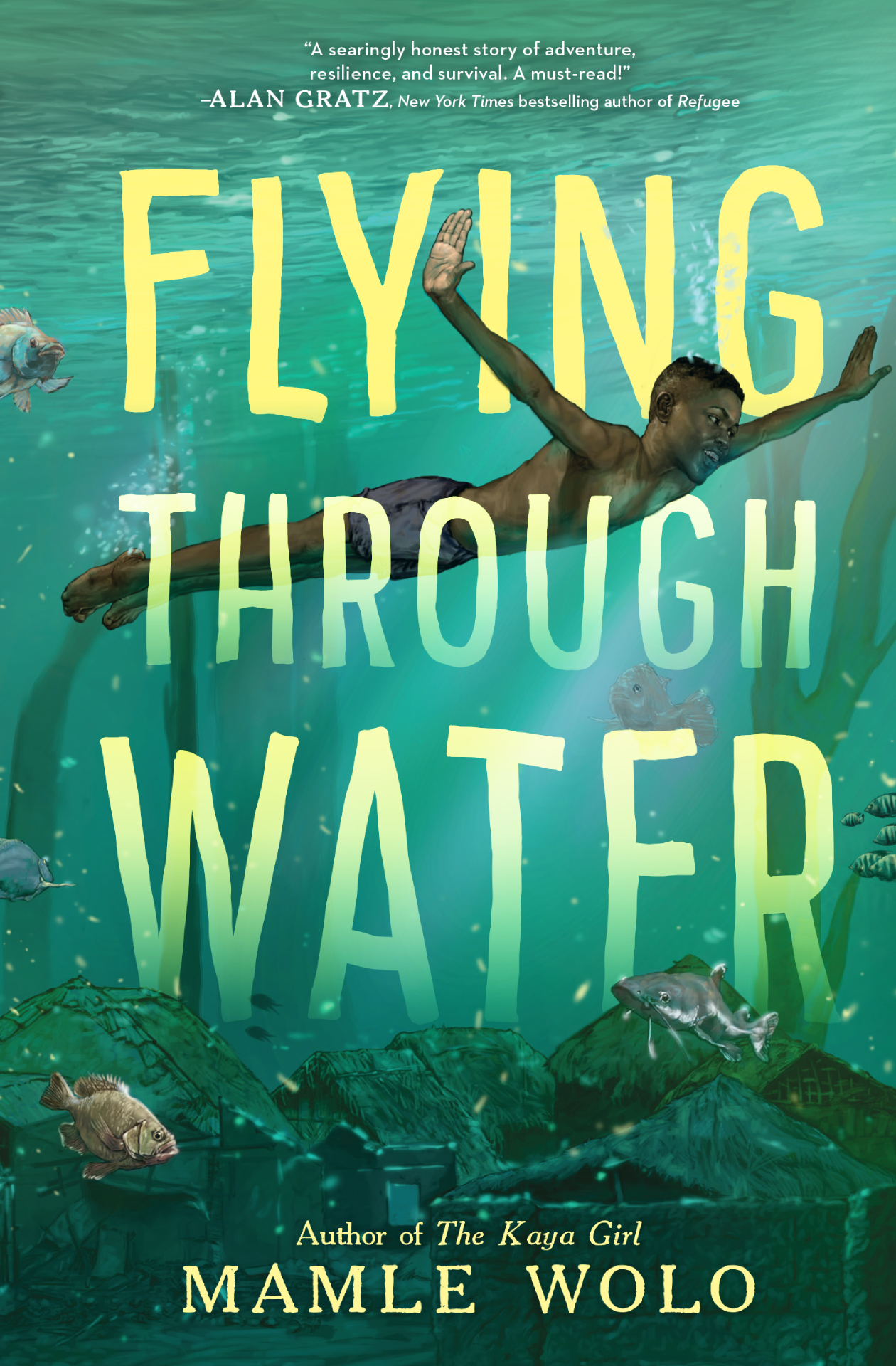
It was hard to believe we hadn’t always lived with Togbe. Klenam barely remembered the days when we lived with both our parents in Sogakope, seven years before, and as for Mawuli, he didn’t even remember our father. But maybe that was a good thing.
Our father worked in Sogakope, and that was where I started school. I never had to wear a ragged uniform back then, and school was the only work I did, but life was hard in a different way because Dad could be so mean. He shouted a lot, and Ma always looked sad. I heard our cotenants whisper that he had girlfriends, but what I hated most was when he got drunk and hit Ma. I was only six or seven, but I’d try to defend her, and he’d beat me off. That was why I was happy when we left. Ma never said anything about it, but one day, while he was at work, she just packed our bags and took us to the bus station, her mouth set in a firm line.
I wasn’t sure what was happening, but I trusted Ma despite the sad, lost air she had about her. As we headed upriver along the Volta it was soothing to look out the window and see the sun bounce off its ripples. I gazed at its marshes and rice fields, at kingfishers hovering to dive, cattle egrets dotting the landscape with white, and weaverbird nests dangling from trees like Christmas decorations. I hadn’t travelled much, but the few times we’d ever gone
anywhere the river would always appear at some point, like when we visited our father’s relatives. That time we went in the opposite direction, following it all the way down to the sea. It was like a kind of travel buddy, always there no matter where we were going or what we were leaving behind.
Togbe came to fetch us from the bus stop at Mepe. Back then his hair was grey, and there was a lot more of it. He was tall and looked fit for his age in a light cotton smock and trousers. We’d only met him a few times before, but Klenam was too young to remember, and Mawuli hadn’t yet been born. When the bus arrived, Ma woke me up and asked me to take the lead. She handed me her big bag with the broken handle. I carried it carefully, and as soon as I got out of the bus, Togbe took it from me and lifted me off my feet. I was surprised he recognised me straightaway like that because it was at least a couple of years since we’d last seen each other.
“Vinye!” he said, and there was so much warmth in the word—“my child”—and in his embrace, that I immediately felt I was exactly where I was meant to be. I had no idea how that worked—feeling more at home in a new place than where I’d lived all my life—but his welcome just seemed to gather up all my anxiety and toss it away like trash. And his smile was what I remembered best about him because it felt like something his childhood had accidentally left behind. His lips would twitch and pucker for a second before they stretched into a curve, like someone who had just done something naughty and wasn’t going to tell you what it was.
He took Mawuli out of Ma’s arms as soon as she emerged, and when he started crying, he made a funny noise like a birdcall. Mawuli went quiet and looked at him, puzzled. Then he wiggled his moustache and started playing peekaboo. Mawuli started to giggle in that out‐of‐control baby way, hiding his face against Togbe’s shoulder. After that Klenam happily took his other hand, skipping along with her purple plastic doll clutched to her chest, while Ma and I loaded our things together with the driver of the rickety taxi Togbe had hailed.





Reviews
There are no reviews yet.